British Folklore Creatures: A Beginner's Guide to Local Legends
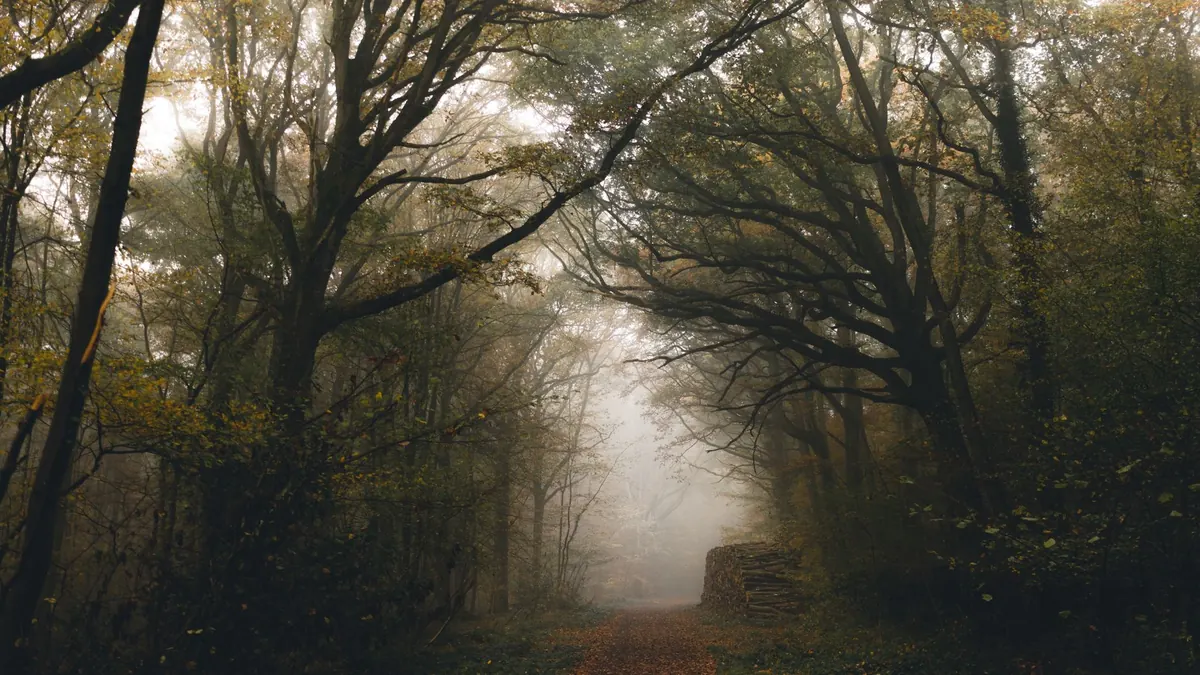
Ask someone to name a British monster and you will usually get a dragon, or something out of a film. The creatures that have genuinely been talked about in these islands for centuries are smaller, stranger and far more particular. They belong to a field, a well, a stretch of coast path. This is a starting map of the main families of British folklore creatures, the regions that claim them, and where to read more when one catches your interest.
What Makes British Folklore Creatures So Local
There is no single British bestiary. Legends were told rather than written, and they changed as they travelled. The same knock-in-the-night spirit is a brownie in Scotland, a hob in Yorkshire and a bwbach in Wales. A water horse in the Highlands is a kelpie; a dragon in a Sussex pond is a knucker. Two villages ten miles apart can have entirely different named beings, and that is the pleasure of it.
Most surviving accounts were collected in the eighteenth and nineteenth centuries, when clergymen and antiquarians wrote down stories their neighbours already knew. The record is patchy and often filtered through a stranger's ears, so treat it as a living tradition rather than a fixed canon. A rough starting map:
- Boggart — Lancashire, Yorkshire and the Borders; a noisy, tricksy household spirit.
- Brownie — Scotland and northern England; helpful by night, easily offended.
- Bwbach — Wales; a household spirit fond of buttermilk and hostile to sermons.
- Selkie — Orkney, Shetland and the Hebrides; a seal who steps out of her skin.
- Kelpies and the each-uisge — Scottish lochs and rivers; horses best left unridden.
- Knucker — Sussex; a water dragon in a deep spring, or "knucker hole".
- Black Shuck — Norfolk, Suffolk and the East; a black dog with burning eyes.
- Barghest and gytrash — Yorkshire and northern England; phantom hounds of the lanes.
- Knockers — Cornish tin mines; spirits who knock to warn or to lead.
- Pixies, or piskies — Devon and Cornwall; small, mischievous and fond of leading walkers astray.
- Tylwyth Teg — Wales; the fair folk under the hills and lakes.
Boggarts, Brownies and Household Spirits
These are the creatures you are most likely to meet in a story, because they live where people live. A brownie works while the household sleeps: threshing, churning, fetching water, tidying in the dark, and asking for nothing more than a bowl of cream or a bit of bread left on the hearth.
There are rules. Do not thank a brownie, and never offer it clothes. In the recorded tales both are taken as an insult or a dismissal, and off it goes. It wants to be useful, not employed.
A boggart is the same creature gone sour. It hides in holes in walls, rattles doors and shifts furniture, and it tends to be attached to a house or a family rather than a person. One of the best-known stories has a family move house to escape theirs, only to hear it announce from the cart that it has come along too.
Selkies and the Seal Folk of the North
Head north for the loveliest and saddest of British folk creatures. A selkie is a seal who can shed her skin and walk on land as a woman. If a man finds the skin and hides it, she cannot return to the sea, and the stories follow the marriage that follows: children, a home, years of ordinary contentment, and an unhappiness that never quite goes away.
It ends as you expect. A child finds the skin in a chest, or she finds it herself, and she goes back to the water. In some versions she leaves the family behind; in others she returns to the shore to watch them. Orkney and Shetland waters are full of seals, and the sea was where the men went and sometimes did not come back. A creature half human and half sea is exactly the shape that grief takes.
The Things in the Water
Kelpies and the each-uisge
A grey or black horse stands quietly by a loch or river, docile enough for a traveller or a child to climb on. Once mounted, it bolts for the water. Highland versions give the creature a land shape too: a handsome man with sand in his hair or seaweed on his coat, which is your warning to keep walking. Folklore does offer a way out. Hold a kelpie, take its bridle, and you gain a horse and a charm. The simpler advice, though, is not to get on in the first place.
Knuckers, grindylows and green-toothed hags
The Sussex knucker lived in deep springs known as knucker holes. One Lyminster version has the beast terrorising the district until a farmer's son finishes it off with a poisoned pudding — a detail that makes the story stick. Further north, pond dwellers such as grindylows, Jenny Greenteeth and Peg Powler of the River Tees grabbed at ankles. Those tales did the job of a modern safety sign: they kept children away from the water.
Black Dogs and Phantom Hounds
Almost every English county claims a phantom dog. Black Shuck haunts East Anglia, shaggy and coal-eyed; the barghest stalks Yorkshire; the gytrash pads along northern lanes, and Charlotte Brontë borrows it for Jane Eyre. A widely repeated account from 1577 describes a beast bursting into churches at Bungay and Blythburgh during a storm and leaving scorch marks on a door that people still point out.
Not all of them are ill-omened. Some black dogs walk with a traveller at night and vanish at the door, or guard churchyards, old lanes and buried treasure. Others are simply a large dog on a dark road, which may be the most unsettling version of all.
Fairies, Pixies and the Knockers Underground
Forget the Victorian picture of tiny winged things on flowers. In British tradition, fairies are adult-sized or at least adult-strength, and they are not sweet. They are described as handsome, well dressed and dangerous, and the standard advice is not to offend them: do not follow the music, do not eat the food, do not thank them carelessly. In Wales, the Tylwyth Teg were said to live beneath lakes and hills, and a man could wander in and lose years of time.
Pixies, or piskies, belong to Devon and Cornwall, and their speciality is the confusion every walker recognises. Being "pixy-led" means a familiar path takes you wrong. The traditional cure is to turn your coat inside out and put it back on — and to stop being quite so confident about your sense of direction.
Knockers in the mines
For the practical end of the folk world, look underground. Cornish miners worked a dark and dangerous trade, and the knockers lived in the workings, rapping on the rock. A knock might be a warning to get out, or a hint that a rich lode lay close by. Miners kept their own counsel and left the last corner of a pasty for them.
How to Read More, and Where to Start
There is no single authoritative text, which is half the fun. A route through it:
- Begin with a dictionary. Katharine Briggs's A Dictionary of Fairies is the standard first stop, and Simpson and Roud's A Dictionary of English Folklore is brisk and reliable on customs and beliefs as well as creatures.
- Then go regional. The Lore of the Land by Jennifer Westwood and Jacqueline Simpson works county by county through England; Wirt Sikes's British Goblins covers Wales; the older county folklore volumes are uneven but full of local detail.
- Read the nineteenth-century collections. Joseph Jacobs's fairy tale books and similar anthologies are out of copyright and easy to find second-hand or in digital archives. Read them as documents of their age as well as storybooks.
- Ask locally. County record offices, local history societies, parish magazines and the Folklore Society often hold material that never made it into print. The best version of a legend is frequently a photocopied pamphlet in a village hall.
- Go and stand in the place. The knucker hole at Lyminster, the church doors at Bungay and Blythburgh, a well or crossroads with a name attached. Folk tales make far more sense with wet feet.
Treat all of it as story rather than natural history and it stays enjoyable. Start with the creature that belongs to your own county, find out what the tales actually say, then follow the boundary to the next one. That is how the tradition has always worked: one person telling the next.
Photo: Mathias Reding / Pexels